Bianca J. Baldridge, PhD

Books


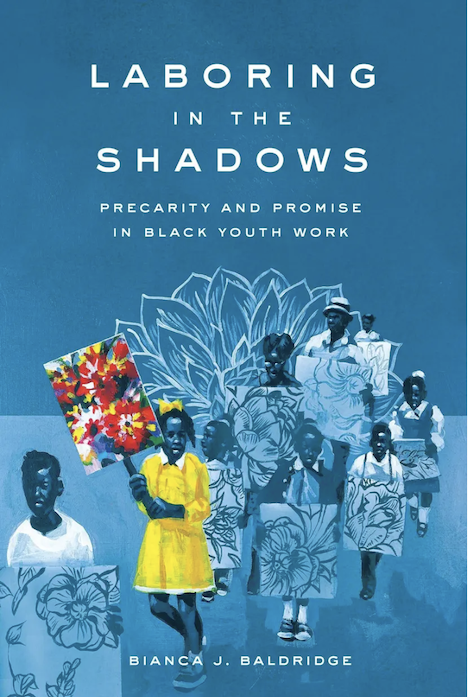
Laboring in the Shadows: Precarity and Promise in Black Youth Work (February 2026)

AUTHOR

Youth workers are essential to the fabric of society. Schools, families, and many of our social institutions rely heavily on their work, yet their contributions often go unrecognized. Laboring in the Shadows explores the critical role of Black youth workers, especially in the lives of vulnerable youth, and the challenges they face in their unstable, underappreciated position.

Bianca J. Baldridge situates the experiences of Black youth workers within the broader context of anti-Blackness and historical inequities. Drawing on rich interview data from across the United States, Baldridge offers a nuanced analysis of how the precarity of this work—marked by high turnover rates, low wages, and housing insecurity—compounds the challenges these workers face. She highlights how Black youth workers resist these structural harms by adopting and implementing innovative pedagogical practices alongside practices of "freedom dreaming" and joy as forms of resistance and pathways to agency for youth despite their precarious roles.

Positioning Black youth workers within a broader network of informal care workers in the United States, Baldridge underscores the significance, fragility, precarity, and power of these dedicated professionals, their essential work, and the possibilities they create for youth.

pre-order here
 

Reclaiming Community: Race and the Uncertain Future of Youth Work

AUTHOR

Approximately 2.4 million Black youth participate in after-school programs, which offer a range of support, including academic tutoring, college preparation, political identity development, cultural and emotional support, and even a space to develop strategies and tools for organizing and activism. In Reclaiming Community, Bianca Baldridge tells the story of one such community-based program, Educational Excellence (EE), shining a light on both the invaluable role youth workers play in these spaces, and the precarious context in which such programs now exist.

Drawing on rich ethnographic data, Baldridge persuasively argues that the story of EE is representative of a much larger and understudied phenomenon. With the spread of neoliberal ideology and its reliance on racism―marked by individualism, market competition, and privatization―these bastions of community support are losing the autonomy that has allowed them to embolden the minds of the youth they serve. Baldridge captures the stories of loss and resistance within this context of immense external political pressure, arguing powerfully for the damage caused when the same structural violence that Black youth experience in school, starts to occur in the places they go to escape it.

buy book


writing

Featured in…


At Our Best: Youth-Adult Partnerships in Out of School Time Settings

CONTRIBUTOR

At Our Best: Building Youth-Adult Partnerships in Out-of-School Time Settings brings together the voices of over 50 adults and youth to explore both the promises and challenges of intergenerational work in out-of-school time (OST) programs. Comprised of 14 chapters, this book features empirical research, conceptual essays, poetry, artwork, and engaged dialogue about the complexities of youth-adult partnerships in practice. At Our Best responds to key questions that practitioners, scholars, policymakers, and youth navigate in this work, such as: What role can (or should) adults play in supporting youth voice, learning, and activism? What approaches and strategies in youth-adult partnerships are effective in promoting positive youth development, individual and collective well-being, and setting-level change? What are the tensions and dilemmas that arise in the process of doing this work? And, how do we navigate youth-adult partnerships in the face of societal oppressions such as adultism, racism, and misogyny? Through highlighting contemporary cases of authentic youth-adult partnerships in youth programs, this fourth volume of the IAP series on OST aims to introduce, engage, and sharpen educators’ understandings of the power and promise of these relationships. Together, the authors in this volume suggest that both building youth-adult partnerships and actively reflecting on intergenerational work are foundational practices to achieving transformational change in our OST organizations, schools, neighborhoods, and communities.

buy book